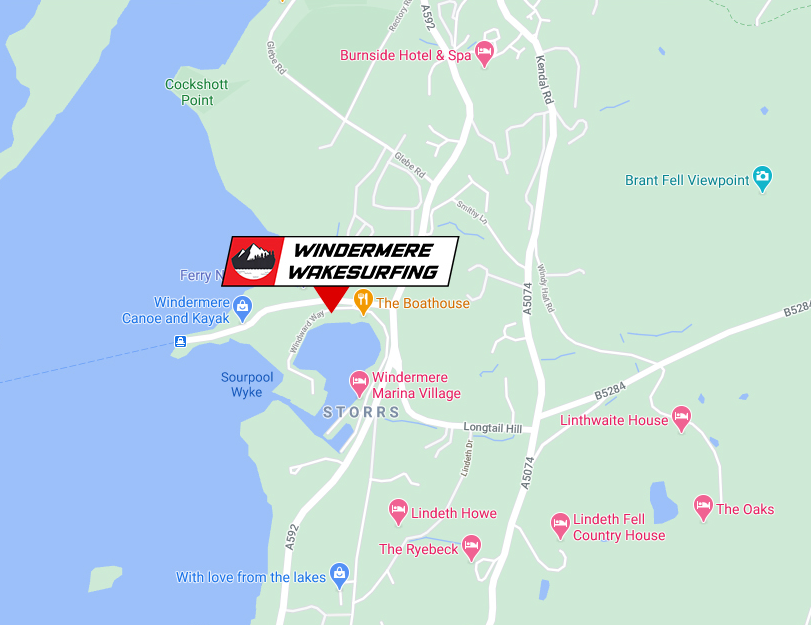

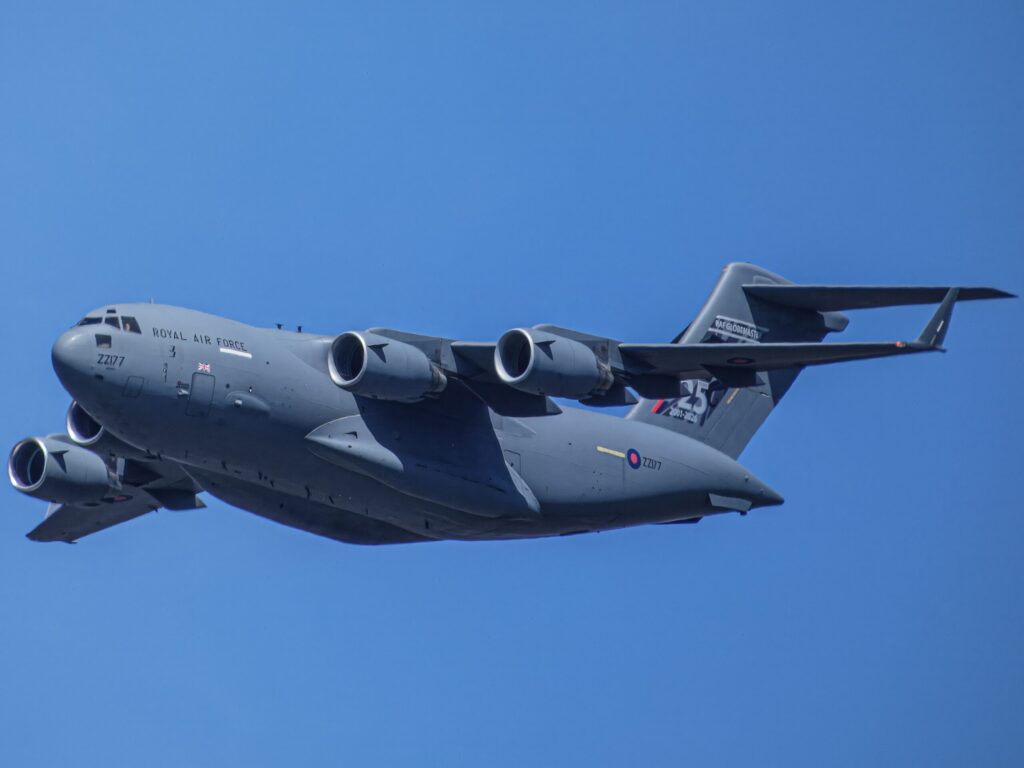
One of the most unexpected thrills of a day on Windermere isn’t on the water, it’s in the sky.
If you’re lucky, you might hear the unmistakable roar of a military jet echoing through the fells before catching sight of a Typhoon, Hawk or even an American F-15 sweeping through the valleys at incredible speed.
For many visitors, it’s a complete surprise. For aviation enthusiasts, it’s one of the best places in the UK to witness low-flying military aircraft in action. Here’s everything you need to know about where, when and how to see them.
Why do fighter jets fly over the Lake District?
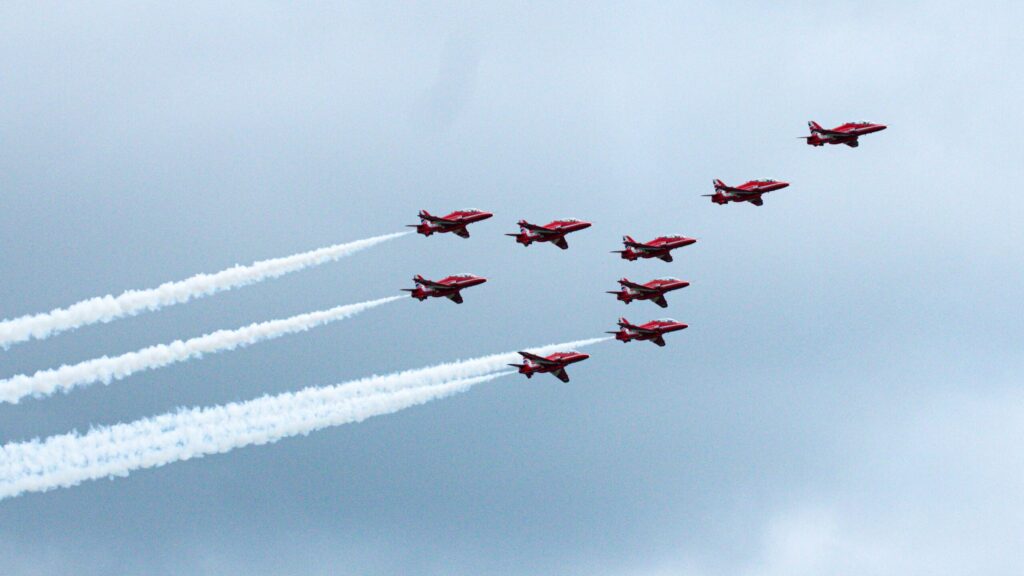
The Lake District forms part of one of the UK’s military low-flying training areas, known as Low Flying Area 17 (LFA 17). The steep valleys and rugged terrain provide realistic flying conditions that help RAF and allied pilots practise navigation and low-level flying, especially in scenarios where GPS may be unavailable.
Aircraft can include:
- RAF Typhoon fighters
- Hawk training jets
- F-35 Lightning II
- USAF F-15 Eagles
- Occasionally transport aircraft and helicopters
In these areas, military jets can fly as low as 100 feet (30 metres) above ground level, and at speeds of up to 500 knots (around 930 km/h), meaning they can pass through a valley in seconds.
The exact aircraft you’ll see varies from day to day depending on training requirements and joint exercises with allied forces, including the US Air Force from nearby bases like RAF Lakenheath.
Sources: GOV.UK, UK AIP, RAF Lakenheath
When is the best time to see them?
While there are no guaranteed flight times, your chances improve significantly if you:
Visit between May and September. Summer offers the best weather for military training, making it the busiest period for low-flying exercises.
Source: GOV.UK – Operational Low Flying Timetable
Choose weekdays. Most flying takes place Monday to Friday during normal military flying hours. Weekends are generally much quieter.
Source: RAF Leeming – Flying Info
Look out between mid-morning and late-afternoon. Although aircraft can appear at almost any time during flying hours, many enthusiasts report seeing the most activity between around 10am and 3pm.
Remember, military training is weather dependent too, so even on busy days there’s never a guarantee.
Where can you watch them?
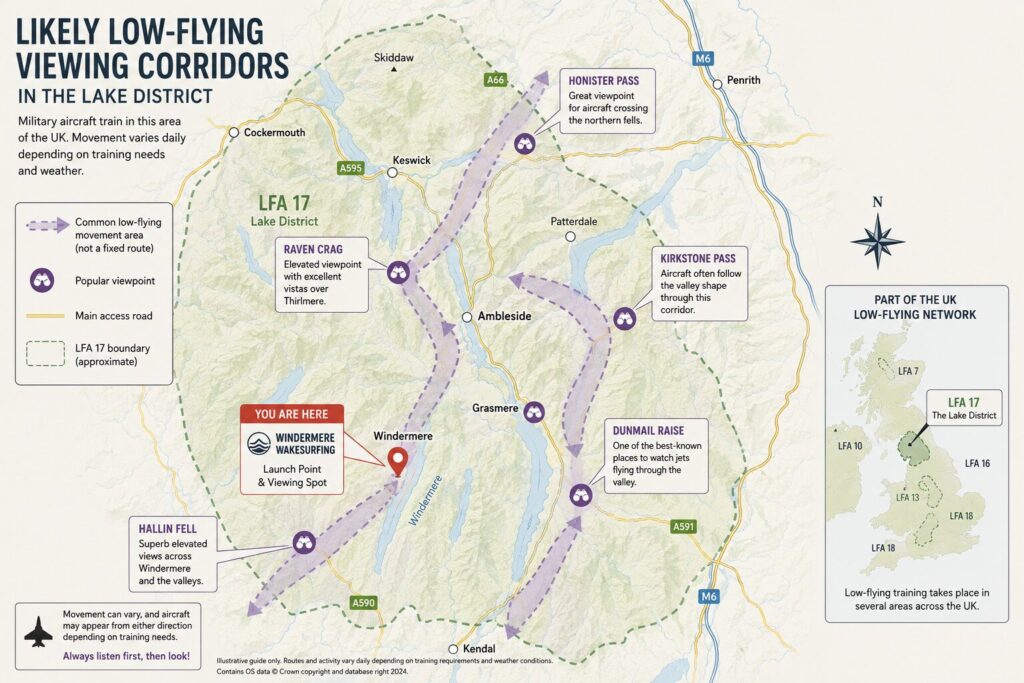
Windermere
One of the most common routes takes aircraft along the length of Windermere before heading towards Ambleside and Grasmere. If you’re out wakesurfing, paddleboarding or simply enjoying the lake, keep an eye (and ear) on the skies. Watching a Typhoon thunder across the lake while you’re floating on the water is an experience you’ll never forget.
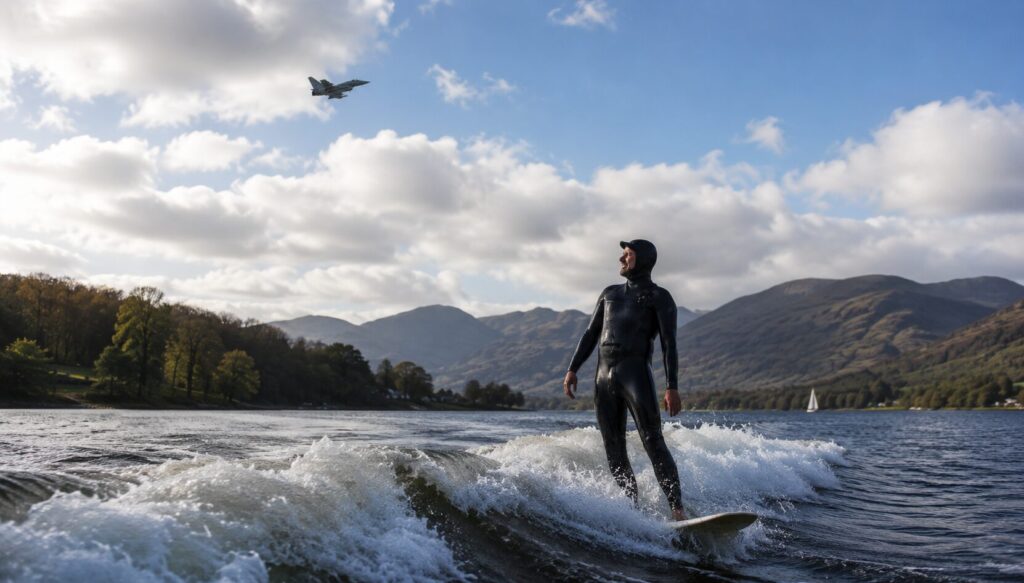
Illustration showing the type of aircraft that may occasionally be seen during military training in the Lake District.
Ambleside
Aircraft frequently pass overhead before climbing through the surrounding valleys.
Grab an ice cream, sit by the water and wait—you might get lucky.
Grasmere
Many aviation photographers consider Grasmere one of the best places in the country to watch low-flying jets. The surrounding hills often put you at almost eye level with the aircraft.`
Dunmail Raise
Ask any military aviation enthusiast where to watch jets in the Lakes and Dunmail Raise will almost certainly be mentioned.
From here you can sometimes watch aircraft race through the valley beneath the surrounding peaks, making it one of the UK’s best-known viewing spots for military aviation enthusiasts.
Sources: Reddit – Lake District, UK Airshow Review
Can you find a flight schedule?
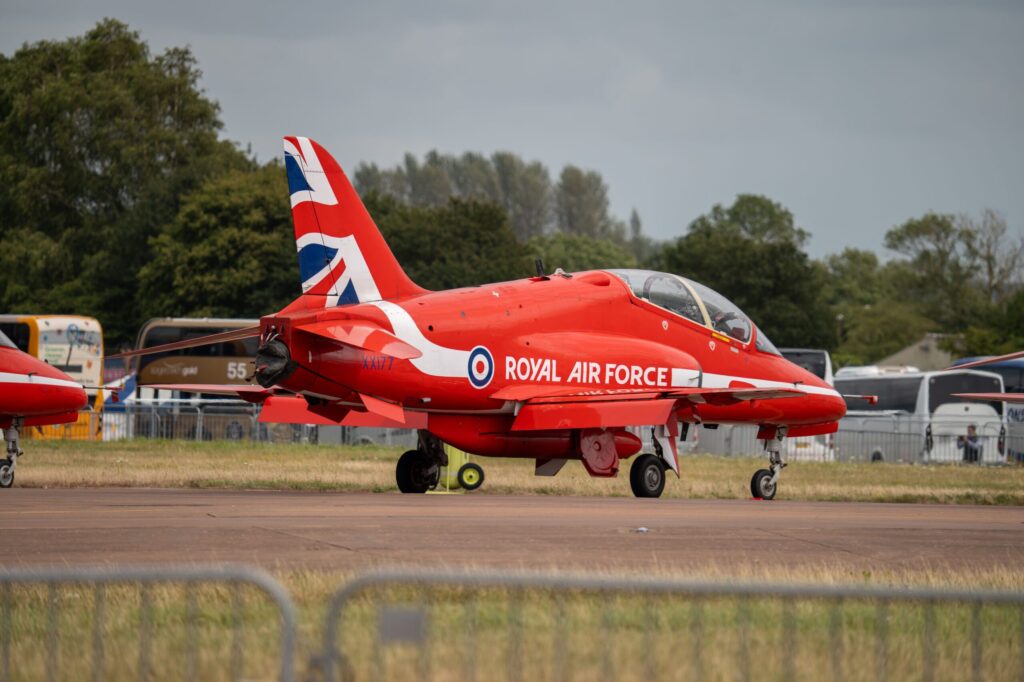
The Ministry of Defence publishes weekly tactical training timetables for certain military training areas, but individual flights are never guaranteed and many routine low-flying sorties aren’t published in advance because plans change with operational requirements and the weather.
Source: GOV.UK – Military Low Flying Timetable
If you’re hoping to maximise your chances you might want to:
- Visit on a weekday.
- Choose a clear summer day.
- Spend a few hours outdoors rather than expecting a jet every few minutes.
Patience usually pays off.
Top tips for spotting jets
- Visit during summer (May to September).
- Weekdays offer the highest chance of seeing activity.
- Bring a camera with burst mode if you’re hoping for photos.
- Listen first, you’ll usually hear the aircraft several seconds before you see them. Because of the surrounding valleys, the sound can echo and travel surprisingly long distances. You’ll often hear an aircraft before you spot it.
Source: CAA – Aircraft Noise - Keep looking around. Aircraft often return through the valley a few minutes later.
Make a day of it
A perfect Lake District adventure could look something like this:
☕ Try one of our recommended places to eat for breakfast
🌅 Morning wakesurf session on Windermere
🥾 Head out on one of our recommended walks
✈️ Watch for fighter jets overhead
🍺 Finish with a lakeside drink as the sun sets
Whether you’re visiting for the water sports, the scenery or the chance of seeing military aircraft carving through the mountains, the Lake District delivers experiences you simply won’t find anywhere else in England.
Planning a wakesurf session? Book your next adventure with Windermere Wakesurfing and you might just leave with more than great memories on the water.
Sources
- GOV.UK – Low flying military aircraft: Where and when low flying happens
https://www.gov.uk/low-flying-in-your-area - GOV.UK – Operational Low Flying Training Timetable
https://www.gov.uk/government/publications/military-low-flying-raf-operational-low-flying-training-timetable - RAF Leeming – Flying Info
https://www.raf.mod.uk/our-organisation/stations/raf-leeming/flying-info/ - UK Aeronautical Information Publication (AIP) – Low Flying Areas
https://www.aurora.nats.co.uk - RAF Lakenheath (USAF)
https://www.lakenheath.af.mil - Civil Aviation Authority – Aircraft Noise
https://www.caa.co.uk - UK Airshow Review
https://www.ukairshowreview.com - Reddit – Lake District community discussion
https://www.reddit.com/r/LakeDistrict/comments/1kg6h5e